Celebrating the Curve: Embracing Human Diversity!
- therapywithkira
- Jul 4, 2025
- 5 min read
One of the most enduring truths I’ve learned as both a sex educator and a therapist is this: our species is magnificently diverse.
It sounds simple—almost obvious—but in practice, it’s radical. We vary in every imaginable way: in body size and shape, in the ways we experience desire (or don’t), in how we process emotions, in our sensory needs, our gender identities, our erotic preferences, our relationship structures, our comfort with touch, and so much more. There is no “standard human”—and when it comes to sexuality, that’s especially true.
But the culture many of us grew up in insists otherwise. Whether through media, medicine, education, or religion, we’re often taught there’s a narrow window of what’s considered “normal” when it comes to bodies, identities, and relationships. This mythical “normal” is usually white, thin, able-bodied, cisgender, heterosexual, monogamous, vanilla, neurotypical, and not too interested in sex but also not too disinterested either. Anything that falls outside of that range can be pathologized, exoticized, or erased entirely.
As a clinician, I see the consequences of this every day: people who carry deep shame because they believe their way of being is “too much” or “not enough” or simply so outside of the "normal" that it will mean nobody understands them or will want to connect w them in their authenticity. People who’ve spent years trying to mold themselves, often to their own loss, to fit into the narrow box of sexual “normalcy”—and in doing so, have disconnected from their own bodies, relationships, and pleasure.
But here’s the thing: diversity is not an outlier. It’s the rule. If you were to graph just about any human trait—sexual desire, arousal patterns, frequency of touch, emotional expression, gendered behaviors—you’d see a bell curve. A wide spectrum. While it’s true that statistically, many people fall somewhere around the “middle”—in terms of sexual desire, identity, behavior, or comfort—many people do not. That’s how distributions work. That’s how species work. And more to the point: that’s how people work. We are supposed to be varied. We are designed for difference. Evolution doesn’t favor sameness; it thrives on divergence, resilience, and adaptability across many forms.
Yet, somehow, we’ve been sold a myth that there's a narrow band of what’s “normal,” and that everything outside of that band is deviant, broken, pathological, or shameful. That’s not science—that’s stigma dressed up as biology. It’s moral panic pretending to be common sense.

Trying to make an entire species fit into one model of sexual expression or one kind of relationship or one set of desires is like trying to put every plant into the same size pot and expecting them all to thrive. It’s not just misguided—it’s dangerous. It leads to internalized shame, isolation, misdiagnosis, and harm. It distracts us from the real question, which is:
What’s true for me, in this body, with this brain, in this moment of my life?
If we stop pathologizing the edges of the bell curve, we make room for a world where people can actually learn to listen to themselves. A world where curiosity is more important than conformity. A world where the work of therapy, education, and healing isn’t about getting people to be more like everyone else—it’s about helping them understand who they are and how to care for themselves and others from that place.
Let’s stop confusing diversity and difference with dysfunction, and instead start recognizing the enormous, beautiful range of our shared human diversity.
I often think of my work as helping people unlearn the strongly held belief that different equals bad. That being in the tail end of a curve means you're broken. It doesn’t. It just means you’re less common—not less worthy.
Think about Leap Day—February 29th. Not many people are born on that day, right? It’s rare. But imagine if no one was ever born on Leap Day. That would actually be pretty weird. Just because something is uncommon doesn’t mean it’s abnormal. Uncommon things are supposed to happen—our world and our species are built on variation. Expecting everyone to fit into the most frequent category on every single axis of identity, desire, or experience is like expecting everyone to be born on a Tuesday. It just doesn’t make sense.
Rarity isn’t a problem. It’s part of the pattern.
Let me be clear: I’m not saying that every expression of sexuality is inherently safe or healthy. Some behaviors cause harm and need boundaries, accountability, or healing. Certainly our Rape Culture does not encourage people to engage thoughtfully in consent-based decision making around their sexual choices. But many expressions that are labeled “weird” or “deviant” or even "dangerous" by our culture are simply… different. Not dangerous. Not immoral. Just outside the median. In fact, if I examine my own lived experience, the people I've met who are drawn to intense forms of sexual expression have been some of the kindest, most thoughtful, and emotionally grounded. This reality is in direct opposition to most of the messages our general culture holds about these forms of sexual expression. There’s a depth of care, communication, and self-awareness that tends to show up in these communities, and I find myself deeply connected to the people who engage in these practices with integrity and intention.
When we accept that human diversity is inevitable—and that it shows up in sexuality just as it does in height, or musical ability, or food preferences—we start to build a different kind of world. I think a much more interesting and pleasure-filled world. A world where people don’t feel ashamed for what they like. One where curiosity replaces judgment. One where safety is about consent and care, not compliance with norms.
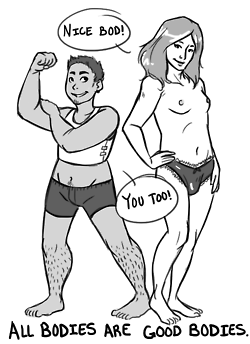
This perspective doesn’t just help clients. It helps clinicians, too. We’re not here to gatekeep normalcy—we’re here to hold space for truth. We’re here to witness the full range of what it means to be human, and to support people in making meaning of their experience in ways that align with their values.
I truly believe that if more people could internalize this truth—that human variation is expected and normal, like literally not a big deal—we’d have a lot less suffering. We’d have more honest relationships. More authentic intimacy. More trust. More compassion.
So the next time you find yourself or someone else struggling with feeling “outside the norm,” I invite you to remember the bell curve. To see it not as a graph that centers and silences, but as a celebration of range. Of resilience. Of real, complicated, beautiful humanity.

Comments